In the Indian travel industry, the entire North East India is often reduced to a handful of names. Shillong, Kaziranga, Gangtok. Maybe Tawang too. Unfortunately, a bunch of villages with the oldest living traditions, untouched landscapes, and stories worth traveling for stay off most itineraries.
This guide covers seven such villages across six states. Each one homestayed, not hotel-chained, and worth building a 2026 trip around. Each village here is reachable by vehicle, has a homestay culture, and offers something you won't find on a standard tour circuit - some rare flowers, some border crossing, a pottery tradition passed down for generations.
What follows isn't a ranked list, but a starting point for planning a trip that goes past the usual North East India checklist:
1. Khonoma, Nagaland (India's First Green Village)
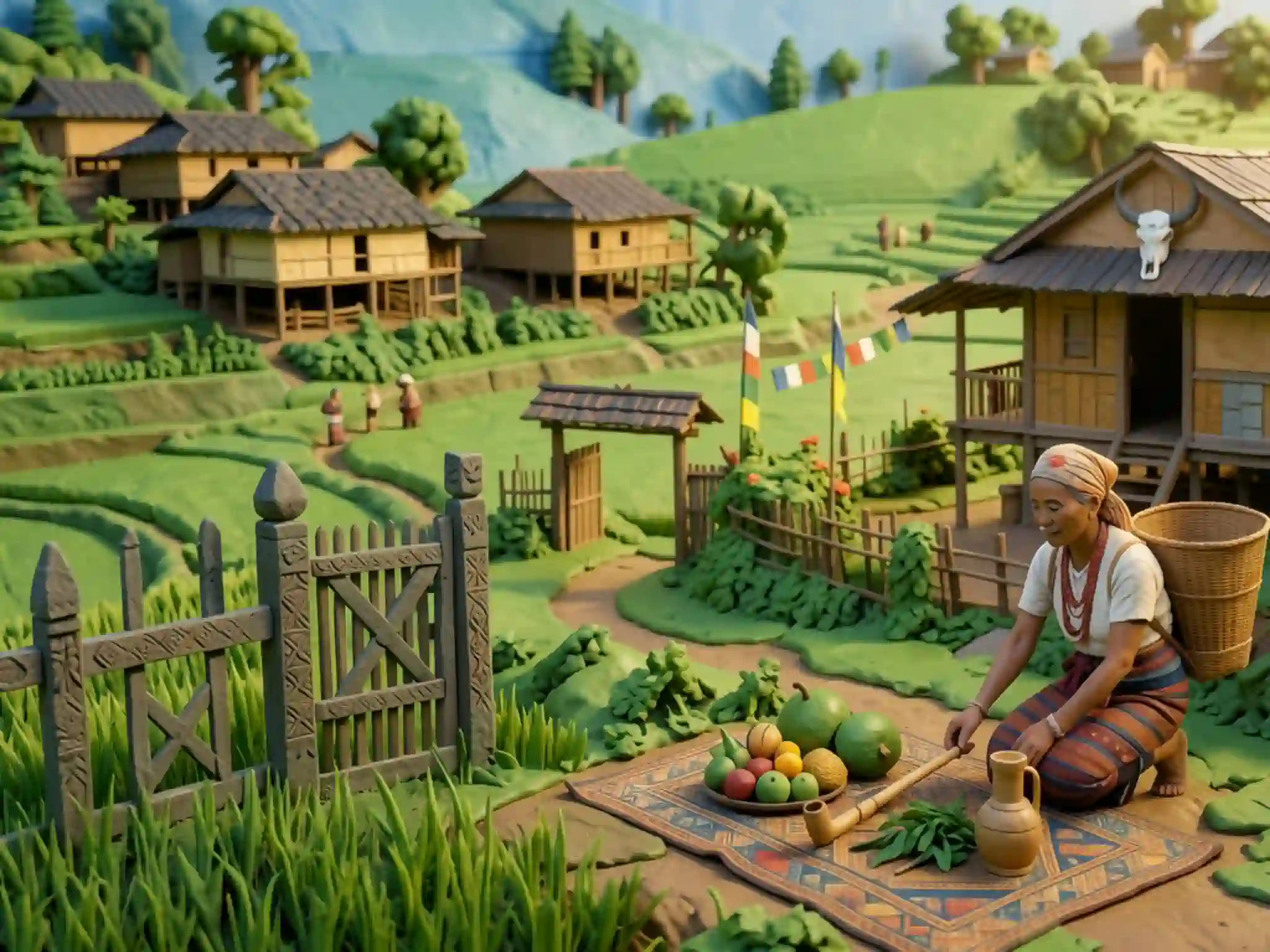
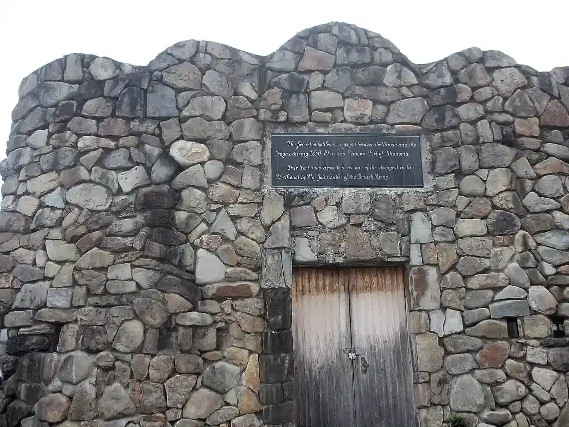
Khonoma lies above a mountain ridge, in the interior of Angami Naga hinterland, in a place from where you look down on the scene spreading out with terrace farms. Simply calling it a “village” is not enough to describe this place. Let it be said this way: it is living proof of a village that chose, above everything else, to protect nature. In the typical past, Khonoma was known for its brave resistance to England and India, during the Naga War.
After that, perhaps the village began to be talked about for another reason. By the unanimous decision of the villagers, a rule was established that banned hunting. As a result, the forest around the village gradually began to turn into a “sanctuary". Also, here lives the Blyth’s tragopan, which is extremely rare.
When you generally walk through Khonoma, stone gates can be seen here and there - ones that have been preserved for hundreds of years. The terrace farms are tended carefully using an old Angami method of cultivation, passed down from one generation to the next. In this way, you sense the slow passage of time, which is easily missed in hectic tourism, and in many “Nagaland travel routes,” you don’t get to experience it.
Staying in a homestay in Khonoma means waking up to the sound of the village rather than a checklist of sights: mornings spent walking the terraces, evenings around a fire hearing stories from a community that fought to keep this land exactly as it is.
Quick Facts
- Distance from Kohima: 20 km (approx. 50 minutes by road).
- Best time to visit: October to April - Cool, clear weather with the terraces at their most photogenic. Avoid June to September monsoon when trails get muddy.
- Nearby attractions: Dzukou Valley, Japfu Peak, Kohima War Cemetery, Kisama Heritage Village (Hornbill Festival venue), Dzuleke Village.
- Good to pair with: Hornbill Festival (early December). Khonoma works well for a few night’s stay during this time.
- Known for: India's first Green Village + A community-led hunting/logging ban that protects the Blyth's tragopan pheasant.
2. Kaho, Arunachal Pradesh (The Last Village Before the Indo-Tibet Myanmar Border)
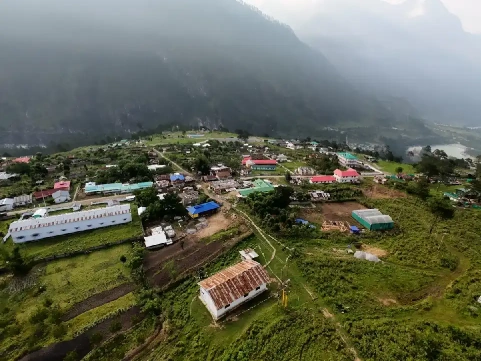
Along the very eastern edge of India, the Lohit River flows as if it were cutting through mountains covered in conifer forests. Kaho village is VERY remote - a place where it feels like when you get there, the farther you stray from the road. The village is home to the Meyor Tribe (Buddhists), but their language and way of life differ almost completely from other regions of Arunachal Pradesh. Only a kilometer separates the village from the border of China’s de facto administrative line, and even the Chinese-side military outposts on the opposite ridge are clearly visible. This is also where the 1962 “Battle of Walong” took place. Visit Kaho and get to listen to first-hand stories of how the grandparents and families of the Kaho village supported the Indian army during the war.
Of course, this road has a very clear reason. You leave Tezhu, then travel through Tidding, Hayuliang, and Havai, and on to Walong. Along the way, the road is always a winding mountain path: you pass waterfalls, cross a Bailey bridge, and encounter a military checkpoint. Only at the very end do you reach the final stretch that leads toward Kaho.
To be honest, there aren’t many ‘sights to explore’ in the village. There are no striking landmarks. That’s precisely why you can experience the area’s genuine atmosphere just as it is. Stay overnight in Kaho, at the Meyor family’s place, and savour homemade food, while hearing stories about the village that has followed the course of the war right in front of the house.
You can’t find such peace anywhere. This is what Kaho brings to the table.
Quick Facts
- Distance/access: ~225 km from Tezu via Tidding - Hayuliang - Hawai - Walong route. Nearest airstrip is Walong (~30 km). Nearest well-connected airport is Dibrugarh (~378 km)
- Best time to visit: Kaho can be visited all year round, except the monsoon months of July - September. (Best avoided due to landslide risk)
- Permits required: Inner Line Permit (ILP) mandatory for Indian nationals; foreign tourists need a Protected Area Permit (PAP)
- Known for: The First village of India, Meyor Buddhist community, proximity to the 1962 Battle of Walong site and the India-China-Myanmar tri-junction (near Diphu Pass)
- Nearby attractions: Dong Valley (Millennium Sunrise Point), Walong War Memorial, Kibithoo, Tilam hot springs
3. Mechuka, Arunachal Pradesh (A Himalayan Valley Few Have Heard Of)
Sitting at 6 thousand feet in Arunachal Pradesh's Shi Yomi district, Mechuka is located close to the Indo - Tibet border that its name (literally meaning "medicinal water of snow") comes from the belief that the glacial melt falling in the Siyom River carries medicinal properties, healing properties. Wide landscapes, wooden houses with bright colored roofs, and the 4 centuries old Samten Yongcha Monastery have earned comparisons to countries like Switzerland, though almost nobody outside serious Northeast India travelers has heard of it. Mechuka, known as “India's last Shangri-La”, is home to Tibetan Buddhist traditions, which shape everything from the architecture to the food (Imagine: thukpa, momos, and yak meat curry rather than anything resembling a typical Indian hill-station restaurant menu).
Getting here is not incidental to the experience, it's the filter that keeps the village unspoiled. The nearest town, Aalo, is roughly 180 km away, and the final stretch from Aalo can take 7 to 9 hours over mountain roads that are still being improved and worked upon. There's no commercial airport nearby and no regular train access. This is a destination for travelers willing to trade convenience for a valley that still feels genuinely untouched, prayer flags and army trucks included.
Looking for a stay in Mechuka, Arunachal Pradesh? Experience the warmth in the hospitality of the beautiful Dechengtheng Homestay, baerly 15 km from Mechuka.

Quick Facts
- Distance/access: ~180 km from Aalo (8-9 hours by road); nearest airport is Dibrugarh (~390 km) or Donyi Polo Airport, Itanagar; nearest railhead Silapathar (~330-390 km)
- Best time to visit: October to March/April: Post-monsoon and winter for clear skies and snow-capped views. Avoid June to September monsoon due to landslide risk
- Permits required: Inner Line Permit (ILP) for Indian nationals; Protected Area Permit (PAP) for foreign nationals
- Known for: Samten Yongcha Monastery, Memba/Adi tribal culture, Siyom River, "Mini Switzerland of Arunachal" landscape
- Nearby attractions: Dorjeeling Village, Hanuman Top viewpoint, Mechuka suspension bridge, Lamang (last accessible point near the India-China LAC, requires separate permit)
4. Mayong, Assam (The Land of Black Magic and Folklore)
In Assam's Morigaon district lies a village that was treated with genuine fear by ancient chroniclers, Mughal generals, and even Mahabharata legends.
A theory has also been presented about the origin of the name, according to which it comes from the Sanskrit word “maya” (“maaja”), that's, from a word meaning “illusion”. It is said that for a long time this place has been an important center where tantric Buddhism was practiced, along with its meditation and training methods. People gathered there were not only the so-called “healers,” meaning practitioners (scholars) who performed medical procedures. But also those who were responsible for healing, as well as individuals who acted like sorcerers or spellcasters.
They were said to summon spirits, cure illnesses, and even transform people into beasts. Such stories were not merely village gossip; there are also records of them in documents from the 17th-century Mughal Empire. According to them, a certain general was greatly shaken by the rumor that “maijon” had magic spells, and although he had clearly been in a position of advantage, he gave up his post in Assam. Archaeologists have also found indications that the dark side of this practice - such as human sacrifice - continued to be carried out well into comparatively modern times.
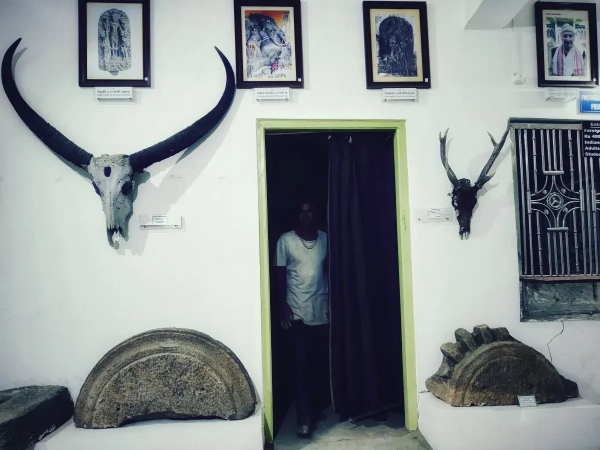
Today only a handful of practitioners remain, and the village's small Central Museum and Research Centre houses ancient manuscripts and ritual artifacts documenting a tradition now fading into history rather than being actively feared.
What makes Mayong an easy addition to a Northeast India itinerary is how close it sits to the region's main gateway: barely 40 km from Guwahati, it's one of the most accessible "unexplored" destinations on this list, and pairs naturally with a visit to the nearby Pobitora Wildlife Sanctuary, known for its density of one-horned rhinos.
Quick Facts
- How to reach: 50 km from Guwahati (1-1.5 hours by road) | Nearest airport is Lokpriya Gopinath Bordoloi International (45-60 km) | Nearest railhead is Jagiroad (25-35 km)
- Best time to visit: October to May (Cool, dry weather ideal for village walks and museum visits). Avoid Monsoon (June - September, when roads have chances of flood)
- Permits required: None. Mayong is fully open, unlike some other villages in this list.
- Known for: Mayong Central Museum | Tantric/Black Magic history | Mentions in the Mahabharata and Mughal-era chronicles.
- Nearby attractions: Pobitora Wildlife Sanctuary | Kachasila Hill (Ancient Shiva temple) | Brahmaputra riverside camping
5. Mawlynnong, Meghalaya (Asia's Cleanest Village)
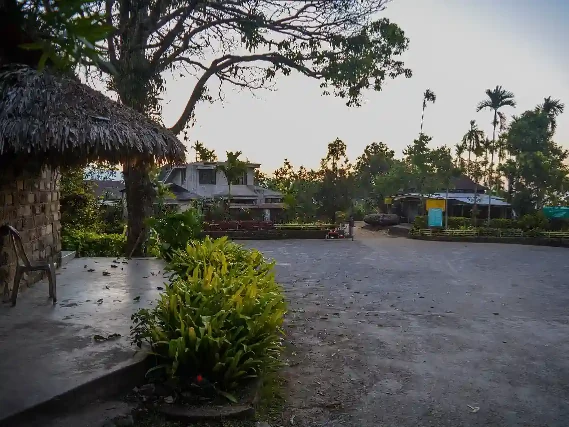
In the early 2000s, a travel magazine gave a small village in Meghalaya a title it never asked for, and since then, it has spent every year living up to it: Asia's Cleanest Village. In Mawlynnong, there are no municipal, separately hired cleaning staff. Residents clean the bamboo-planted paths by following long-established practices, both children and elderly people, and household waste is composted and returned to the soil. Here, the use of plastic is banned, and smoking is largely looked down upon.
Stone-paved paths, houses with flowers spilling from their windows and eaves, and a church that looks like a postcard. And in addition, from the village you can easily walk to the “bridge of living roots” - a bridge where people live. In Meghalaya there are many root bridges that you can’t reach within a single day. But this is one of the few that can be reached relatively easily.
But Mawlynnong's fame has become its own complication. Up to a thousand day-trippers pass through on a busy day, and in 2026 the village introduced a new rule closing itself to day visitors on Sundays entirely - a quiet signal that the village would rather host guests overnight than get photographed and left behind. Stay in a homestay here rather than passing through, and the difference is immediate: by evening the crowds are gone, and what's left is a girl in school uniform sweeping her family's path, two women talking in Khasi outside the church, and a village that goes back to being itself.
Checkout the vibrant options of homestays in Mawlynnong village, and experience hygeine and cleanliness in its purest form, which is hard to find in the rest of Asia.
Quick Facts
- Distance/access: ~90 km from Shillong (2.5–3 hours by road); nearest airport Shillong (Umroi, ~78-100 km) or Guwahati (~170 km); nearest railhead Guwahati (~172 km)
- Best time to visit: October to April for cool, clear weather; monsoon (June–September) brings dramatic greenery and waterfalls but slippery paths
- Note for planning: Closed for day-trip visitors on Sundays as of 2026. Overnight homestay guests are unaffected
- Known for: Community-led zero-waste living, Living Root Bridge, Balancing Rock, Sky View bamboo tower overlooking the Bangladesh plains
- Nearby attractions: Riwai village, Dawki (Umngot River boat rides, ~28 km), Cherrapunji (~1 hour)
6. Champhai, Mizoram (The Rice Bowl on the Myanmar Border)
Champhai, located in the eastern part of the state of Mizoram, in a valley between mountains. Terraced rice fields curve in layers, and as far as the eye can reach, the greenness of the rice stretches out. So vast that it feels less like less of a farmland and more like something that overwhelms you.
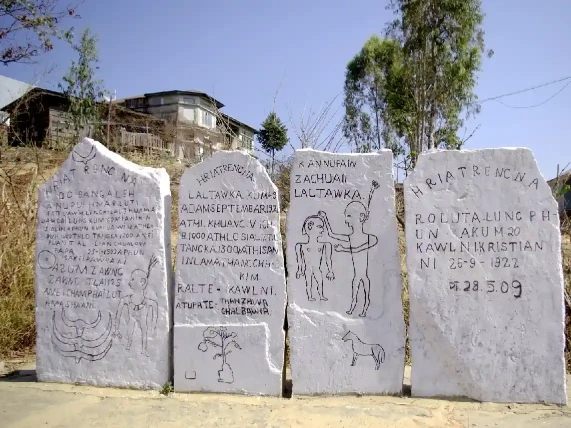
This isn't a marketing phrase for tourism. But a reflection of the fact that, in terms of rice production, Champhai stands out across the whole state, so there’s no need to invent a new label, because this description fits as it is. In proportion to its size, the city also has surprisingly many stories, passed down from generation to generation. According to tradition, the earliest Mizos arrived in India, and their gateway there was Champhai. In addition, around the village there are dozens and even hundreds of large stone boulders, scattered about, bearing marks that bring to mind hunts, battles, and turning points—moments that each time mattered.
Long before the place began to be regarded as a tourist destination, it already had its own history.
Getting to Champhai is part of what keeps it off most itineraries. Roughly 190 km from Aizawl, the village is a six to eight hour drive over hilly, often narrow roads, through small towns where every roadside eatery seems to serve the same honest thali of rice, boiled greens, and a choice of meat for the same fixed price. There's no shortcut here, but the payoff is a town of high literacy, quiet churches, terraced fields turning gold at harvest, and a border-town energy that feels alert rather than tense - a place that has spent generations adjacent to a frontier without being defined by it.
There is no shortcut on how to reach Champhai, but the reward is great. It's a village where people know how to read and write, a quiet church, and terraced fields that grow slowly and glow everywhere in golden splendor at harvest time.
Quick Facts
- Distance/access: ~190 km from Aizawl (6–8 hours by road). Nearest airport is Lengpui Airport, Aizawl (~190-220 km). No rail access. Nearest railhead is Silchar/Bairabi. (~300-380 km)
- Best time to visit: October to March. Dry roads, mild weather (15–25°C); rice terraces are at their most photogenic during the September - October harvest. Avoid monsoon due to landslide risk.
- Permits required: None for Champhai town itself; visiting Rih Dil (technically in Myanmar) requires separate permission from the Deputy Commissioner's office.
- Known for: Terraced rice fields, Zokhawthar border crossing, Rih Dil Lake, Murlen National Park, Lengteng Wildlife Sanctuary.
- Nearby attractions: Kungawrhi Puk caves, local vineyards and passion fruit/kiwi orchards, Champhai Winery.
7. Andro, Manipur (A Living Pottery Village Near Loktak Lake)
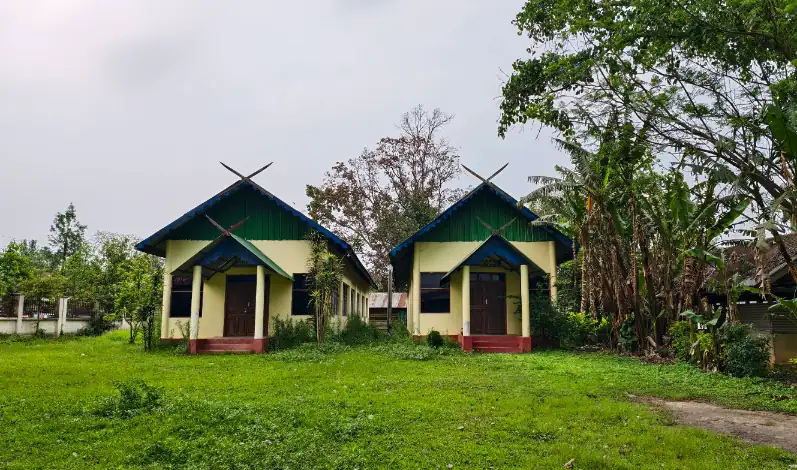
Barely 25 km from Imphal, Andro is one of the few villages in India where pottery is still shaped almost entirely without the potter's wheel, using techniques believed to have been passed down through generations for centuries. In this village, people live here, including “Loi” and others, and it is historically known as a relatively distinctive community. In different parts of the village, you can see water pots and cooking vessels made of clay. They are first shaped by hand from local clay, one by one, and then fired in outdoor kilns. Even today, tourists can see the entire process with their own eyes. Andro, however, offers more than just pottery.
Through its own cultural area, it also preserves and maintains old ways of life. There is a row of traditional, ancient dwelling buildings from several different tribes, and sacred objects are also on display. This allows visitors to experience up close the country’s diverse and deep cultural background. The food consists mainly of smoked fish, seasonal vegetables, and black rice, as well as distinctive dishes that make use of fermentation. It is not so much like the standard flavors often seen in North India.
Andro is surprisingly easy to get to, which is a delightful bonus. If you want to enjoy the simple everyday life and authentic atmosphere of the countryside, but the idea that your travel plans should feel a bit like an expedition doesn’t really appeal to you, this is for you. The roads from Imphal are in good condition,. And it’s easy to get there; by your own car, you can reach it in about an hour.
It’s also worth combining sightseeing in the Andro area. For example, Loktak Lake and Keibul Lamjao National Park can be included in the same package, and you can also visit other attractions in the Imphal Valley along the way. Although the village has gradually become better known even among domestic travelers who visit for cultural experiences. It still doesn’t have the same kind of large crowds as the most popular tourist destinations.
Quick Facts
- Distance/access: ~25 km from Imphal (45–60 minutes by road). Nearest airport is Imphal International Airport (~30 km). No railway station in Manipur. Nearest major railhead is Dimapur, Nagaland (~210 km), followed by a road journey.
- Best time to visit: October to March for pleasant weather and cultural festivals; April–May is warmer, while June–September brings heavy monsoon rains.
- Permits required: No Inner Line Permit (ILP) is required for Indian nationals visiting Manipur as of 2026; foreign nationals can generally visit without special protected-area permits, subject to prevailing government regulations.
- Known for: Traditional wheel-less pottery, Loi community heritage, Andro Cultural Complex, indigenous museums, and handcrafted earthenware.
- Nearby attractions: Loktak Lake, Keibul Lamjao National Park, Imphal War Cemetery, Kangla Fort, and the Ima Keithel (Mother's Market) in Imphal.
Why Stay in a Village Homestay
A hotel gives you a room. A village homestay gives you a place in someone's everyday life. You don’t expect the same kind of empty rooms, or the same breakfast buffet. Instead, each morning after you wake up, you get to savor home-cooked food and chat naturally with the host family. You also come into contact with ways of life that have been dripped down from generation to generation. You experience a walk through a bamboo grove together with villagers, or learn to cook local delicacies that you won’t find on any shop’s menu. Your journey isn’t only about “where you sleep,” but above all about “where you go and what you encounter.”
In many lesser-known villages, tourism is sustained above all by the people of the area itself. By choosing private accommodation, you don’t pay the bills of large hotel chains. You directly support the families who live there. By staying, you can help repair and preserve houses that have been handed down for generations, and support everyday life in the village. It also gives momentum for younger generations to carry these traditions on to the next generation.
Overnight stays in a village’s private accommodation aren't only about securing lodging, but because you can experience the land in its most intimate form. If you want to learn more about “hidden village communities,” Rural Stay India presents selected private accommodations in villages in the northeastern part of India. When you come into contact with life there, you can surely also share your strength with the people who make this travel destination special.